
सुर्खियां
- ●Breakthroughs in Prostate Cancer Treatment: What Every Patient Should Know
- ●Ovarian Cancer: The Silent Disease Women Cannot Ignore
- ●Children and Blood Cancer: Why Awareness is Crucial
- ●Women in Aviation India commences the celebration of 10th Girls in Aviation Day
- ●2025 Announcement, Appointment of New Board to Lead Hindustan National Glass & Industries Ltd
- ●अरुण जेटली जीवन परिचय
- ●आरबीआई का फरमान अब एटीएम से टैक्स भरने या फंड ट्रांसफर पर नहीं घटेंगे फ्री ट्रांजेक्शन
- ●उत्तरकाशी में बदल फटने से तबाही, अगले २४ घंटे भारी
- ●पूर्व वित्त मंत्री अरुण जेटली की हालत बेहद नाजुक, आज जारी होगा मेडिकल बुलेटिन
- ●बिहार के पूर्व मुख्यमंत्री जगन्नाथ मिश्रा का निधन
- ●खतरे के निशान से ऊपर यमुना, सीएम केजरीवाल ने बुलाई आपात बैठक
- ●कश्मीर घाटी में फिर खुले स्कूल-कॉलेज
- ●रांची में बूरारी केस जैसी घटना एक ही परिवार से सात लोगों की मौत
- ●दिल्ली में यमुना नदी का जल स्तर खतरे के निशान से उपर
- ●व्हाट्सएप ने लगाई रोक, एक साथ पांच से ज्यादा मैसे नहीं कर पाएंगे फॉर्वर्ड w
- ●मन की बात : जुलाई और अगस्त का महीना किसानों और सभी नौजवानों के लिए महत्वपूर्ण
- ●असम में एनआरसी का फाइनल ड्राफ्ट जारी, 40 लाख लोगों को होना बड़ सकता है बेघर
- ●उत्तर प्रदेश को 81 परियोजनाओं की सौगात
- ●सावन का पहला सोमवार मंदिरों में श्रद्धालुओं की उमड़ी भीड़
- ●पीएनबी घोटाला: चंदा कोचर और शिखा शर्मा को भेजा गया समन
- ●डॉ श्यामा प्रसाद मुखर्जी का जीवन परिचय
- ●प्रधानमंत्री सुरक्षा बीमा योजना, वार्षिक प्रीमियम सिर्फ 12 रुपए
- ●सीरिया में रूसी विमान दुर्घटनाग्रस्त
- ●तमिलनाडु में पेरियार की मूर्ति पर हुआ हमला, बीजेपी नेताओं के आदेश के बाद घटना को दिया गया अंजाम
- ●रवीना टंडन के खिलाफ दर्ज हुआ केस
- ●श्रीदेवी की याद में महिला फिल्म महोत्सव का आयोजन
- ●श्रीलंका में दस दिन का आपातकाल, भारतीय क्रिकेट टीम की सुरक्षा बढ़ाई गई
- ●बर्थडे स्पेशल श्रद्धा कपूर
- ●पूर्वोत्तर में लहराया बीजेपी का परचम, कांग्रेस को मिली फिर एक बार हार
- ●बासी रोटी खाने के ये फायदे नहीं जानते होंगे आप
- ●अमेरिका मिशिगन यूनिवर्सिटी में फायरिंग दो लोगों की मौत
- ●अटल बिहारी वाजपेयी का जीवन परिचय
- ●अमेरिकी कोर्ट से नीरव मोदी को मिली बड़ी राहत
- ●मणिपुर में भूकंप के झटके
- ●कांगो में जातीय हिंसा में 49 लोगों की मौत
A 4,500-Year-Old Dice: Proof of the Enduring Continuity of the Indus-Saraswati Civilization
Beyond ruins and geography, India's heritage thrives through living customs, symbols, and an unbroken cultural consciousness. Read about this extraordinary ancient find.
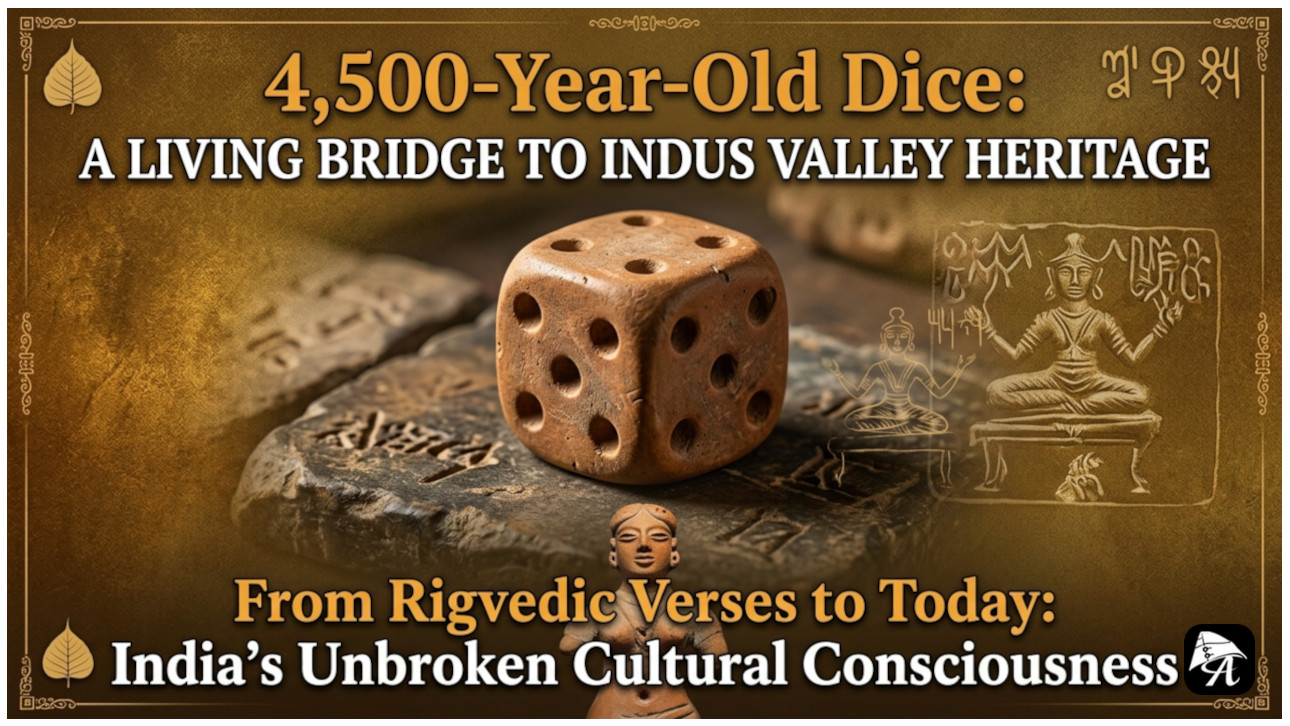
4,500-Year-Old Dice: A Powerful Reminder of the Living Continuity of the Indus-Saraswati Civilization
History is never merely an accumulation of ruins, geographical territories, or lifeless relics unearthed from the dark recesses of the earth. The true legacy of any civilization is defined by its living customs, active symbols, persistent rituals, and an unbroken cultural consciousness that survives the relentless tests of time to remain embedded in the daily fabric of a society. From this vantage point, modern India stands as a beautifully fluid, enduring manifestation of the ancient Indus-Saraswati Civilization.
This 4,500-year-old terracotta dice from the Indus-Saraswati Civilization is a powerful reminder of India’s living heritage. Dicing is also mentioned as a popular game in Rig and Atharva Vedas (two of the four sacred Vedic scriptures). From symbols and craftsmanship to rituals, yogic practices, and collective memory, numerous elements of ancient Indian civilization continue to thrive in the daily social and religious life of Indian society across regions and communities. Civilizational inheritance is not just about geography or ruins, it is defined by living customs, symbols, rituals, and unbroken cultural consciousness. India is the enduring living continuity of the Indus-Saraswati Civilization.
-Recently brought into the public spotlight by cultural researchers and historians, this small cube of fired clay is far more than a routine archaeological artifact. It functions as a direct bridge that brings the text of the world’s oldest sacred books alive right before our eyes.
Deep Interconnections with Vedic Scriptures
The sheer depth to which the game of dice was ingrained in the ancient Indian psyche is elegantly preserved across Vedic literature. Two of the four core sacred scriptures—the Rigveda and the Atharvaveda—explicitly record dicing (known historically as Dyuta-Krida) as an incredibly popular and universal pastime. The 10th Mandala of the Rigveda features the famous 'Aksha Sukta' (The Gambler's Lament), which reflects deeply on the psychological pull and social dynamics surrounding the game. This terracotta cube serves as tangible proof that the very games contemplated by Vedic rishis were being enthusiastically played in the brick-and-mortar homes of common citizens along the banks of the Indus and Saraswati rivers forty-five centuries ago.
Ingenious Craftsmanship and Independent Mathematical Logic
Recovered from major metropolitan hubs like Harappa and Mohenjo-daro, these ancient terracotta dice showcase a precise six-sided geometry, complete with shallow drilled dots or pips ranging from 1 to 6. However, they reveal an intriguing design difference from modern gaming conventions:
- Modern Standard Dice: The layout is mathematically standardized so that opposite sides always add up to the number seven (1 opposite 6, 2 opposite 5, etc.).
- Indus-Saraswati Dice: A substantial number of recovered Harappan dice place 1 opposite 2, 3 opposite 4, and 5 opposite 6.
This structural variance demonstrates that the artisans and thinkers of the ancient Indian subcontinent had independently engineered their own unique, highly sophisticated system for handling mathematical randomization and games of chance long before the classical era of Europe or the Mediterranean.
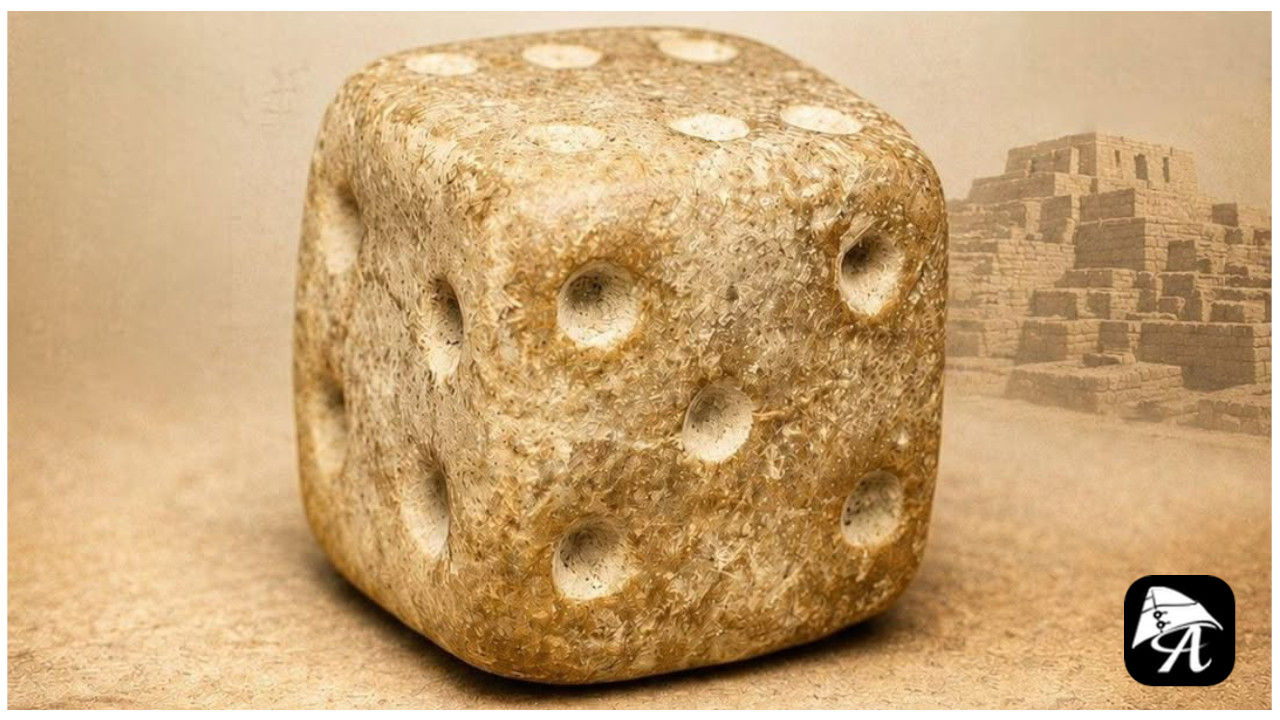 The 4500-Year-Old Indus Valley Terracotta Dice
Beyond Ruins: A Civilizational Consciousness
The historical inheritance of the Indus-Saraswati valley is not confined to static museum showcases or geometric town planning templates. Instead, its essence continues to flourish organically across every corner of contemporary India:
- Iconography and Social Symbols: Terracotta mother goddess figurines, the ancient custom of applying vermilion (Sindoor) along the parting of a woman's hair, and the veneration of the sacred Pipal tree seen on ancient stone seals remain active realities in modern households.
- Yoga and Spiritual Practices: The legendary 'Pashupati Seal'—which depicts a figure seated in a meditative yogic posture (Asana)—proves beyond doubt that the philosophical foundations of Indian spiritual science have remained beautifully intact.
- Collective Rituals and Sacred Space: The construction of elaborate brick fire altars, the profound social and spiritual importance of public ritual purification (as seen in Mohenjo-daro's Great Bath), and nature-centric worship are mirrored today in the grand festivals celebrated along India's sacred rivers.
Conclusion
The quiet brilliance of this ancient Harappan dice lies in its timeless simplicity. It is an artifact that needs no linguistic decryption; its purpose is understood instantly across millennia. It reminds us that while cities may fade and empires change hands, the underlying soul of Indian culture never disintegrated. India is not simply a country built upon historical ground—it is the living, breathing, and enduring continuation of a majestic cultural consciousness that began 4,500 years ago.
...


-
Leave a Comment
Recent Comments (0)
No comments yet. Be the first to comment!