
सुर्खियां
- ●Breakthroughs in Prostate Cancer Treatment: What Every Patient Should Know
- ●Ovarian Cancer: The Silent Disease Women Cannot Ignore
- ●Children and Blood Cancer: Why Awareness is Crucial
- ●Women in Aviation India commences the celebration of 10th Girls in Aviation Day
- ●2025 Announcement, Appointment of New Board to Lead Hindustan National Glass & Industries Ltd
- ●अरुण जेटली जीवन परिचय
- ●आरबीआई का फरमान अब एटीएम से टैक्स भरने या फंड ट्रांसफर पर नहीं घटेंगे फ्री ट्रांजेक्शन
- ●उत्तरकाशी में बदल फटने से तबाही, अगले २४ घंटे भारी
- ●पूर्व वित्त मंत्री अरुण जेटली की हालत बेहद नाजुक, आज जारी होगा मेडिकल बुलेटिन
- ●बिहार के पूर्व मुख्यमंत्री जगन्नाथ मिश्रा का निधन
- ●खतरे के निशान से ऊपर यमुना, सीएम केजरीवाल ने बुलाई आपात बैठक
- ●कश्मीर घाटी में फिर खुले स्कूल-कॉलेज
- ●रांची में बूरारी केस जैसी घटना एक ही परिवार से सात लोगों की मौत
- ●दिल्ली में यमुना नदी का जल स्तर खतरे के निशान से उपर
- ●व्हाट्सएप ने लगाई रोक, एक साथ पांच से ज्यादा मैसे नहीं कर पाएंगे फॉर्वर्ड w
- ●मन की बात : जुलाई और अगस्त का महीना किसानों और सभी नौजवानों के लिए महत्वपूर्ण
- ●असम में एनआरसी का फाइनल ड्राफ्ट जारी, 40 लाख लोगों को होना बड़ सकता है बेघर
- ●उत्तर प्रदेश को 81 परियोजनाओं की सौगात
- ●सावन का पहला सोमवार मंदिरों में श्रद्धालुओं की उमड़ी भीड़
- ●पीएनबी घोटाला: चंदा कोचर और शिखा शर्मा को भेजा गया समन
- ●डॉ श्यामा प्रसाद मुखर्जी का जीवन परिचय
- ●प्रधानमंत्री सुरक्षा बीमा योजना, वार्षिक प्रीमियम सिर्फ 12 रुपए
- ●सीरिया में रूसी विमान दुर्घटनाग्रस्त
- ●तमिलनाडु में पेरियार की मूर्ति पर हुआ हमला, बीजेपी नेताओं के आदेश के बाद घटना को दिया गया अंजाम
- ●रवीना टंडन के खिलाफ दर्ज हुआ केस
- ●श्रीदेवी की याद में महिला फिल्म महोत्सव का आयोजन
- ●श्रीलंका में दस दिन का आपातकाल, भारतीय क्रिकेट टीम की सुरक्षा बढ़ाई गई
- ●बर्थडे स्पेशल श्रद्धा कपूर
- ●पूर्वोत्तर में लहराया बीजेपी का परचम, कांग्रेस को मिली फिर एक बार हार
- ●बासी रोटी खाने के ये फायदे नहीं जानते होंगे आप
- ●अमेरिका मिशिगन यूनिवर्सिटी में फायरिंग दो लोगों की मौत
- ●अटल बिहारी वाजपेयी का जीवन परिचय
- ●अमेरिकी कोर्ट से नीरव मोदी को मिली बड़ी राहत
- ●मणिपुर में भूकंप के झटके
- ●कांगो में जातीय हिंसा में 49 लोगों की मौत
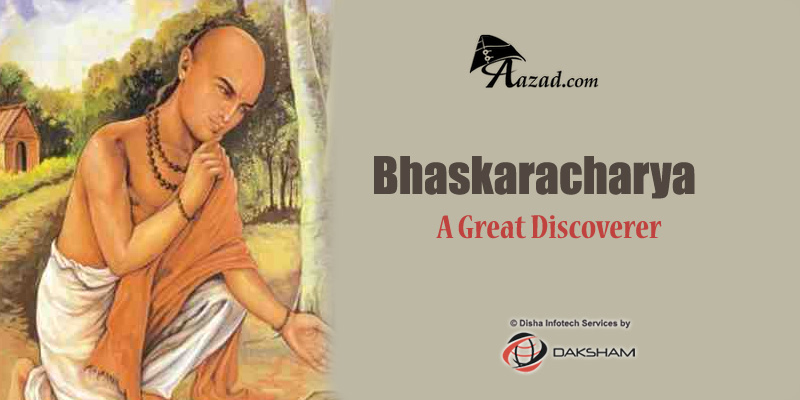
Biography of Bhaskaracharya: Discoveries, Calculus & Gravity Laws
Explore the life and achievements of ancient Indian mathematician Bhaskaracharya (Bhaskara II). Read about Siddhanta Shiromani, Lilavati, division by zero, and early calculus concepts.
Introduction and Early Life
Bhaskaracharya, also known as Bhaskara II, was one of the most brilliant mathematicians and astronomers of ancient and medieval India. Born in 1114 AD in the Bijjadavida region (modern-day Vijayapura/Bijapur in Karnataka), he belonged to a traditional family of scholars. He learned mathematics and astronomy from his father, Mahesvara, who was a renowned astrologer and scholar.
The Magnum Opus: Siddhanta Shiromani
At the young age of 36 (around 1150 AD), Bhaskaracharya completed his monumental work, the Siddhanta Shiromani. This massive treatise is divided into four major parts, each dealing with specific branches of mathematics and astronomy: Lilavati (arithmetic), Bijaganita (algebra), Grahaganita (astronomy/planetary mathematics), and Goladhyaya (spherical trigonometry and the celestial globe).
-Groundbreaking Mathematical Discoveries
Bhaskaracharya made revolutionary contributions that predated Western discoveries by several centuries. He was the first to state that any number divided by zero becomes infinity (Khahara). In his work Bijaganita, he solved indeterminate quadratic equations of the type $Nx^2 + 1 = y^2$ (later known in the West as Pell's equation) using the ingenious Chakravala method (cyclic method).
Pioneer of Calculus and Gravity
Centuries before Sir Isaac Newton and Gottfried Leibniz developed calculus, Bhaskaracharya formulated concepts of differential calculus. He introduced the concept of instantaneous motion (Tatkalika-gati) to measure the precise velocity of planets. Furthermore, in Goladhyaya, he described the Earth's inherent attractive force (Gurutvakarshan), explaining that the Earth pulls objects toward itself due to its natural power long before Western science formalized the law of gravity.
Leadership at Ujjain Observatory and Legacy
Recognizing his unparalleled genius, Bhaskaracharya was appointed as the head of the historic astronomical observatory at Ujjain, which was the premier center for mathematical and astronomical research in ancient India. He passed away around 1185 AD, leaving behind a profound scientific legacy that continues to inspire the world.
-
Leave a Comment
Recent Comments (0)
No comments yet. Be the first to comment!